Astrology For Beginners Step By Step
This guide is made for you. We’ll break down the basics of astrology. You’ll learn how to look at your own birth chart. It’s like a map of the stars from the moment you were born. We’ll go step by step. You’ll understand planets, signs, and houses. This knowledge can help you see yourself in a new light.
Astrology for beginners involves understanding the core components of a birth chart: planets, zodiac signs, houses, and aspects. By learning how these elements interact at the specific time and place of your birth, you can begin to interpret the celestial map to gain insights into your personality, life path, and relationships.
Understanding Your Birth Chart: The Cosmic Blueprint
Your birth chart is the heart of personal astrology. It’s a picture of the sky. This picture is taken at the exact moment you took your first breath. It’s also specific to the place you were born. Think of it as your unique cosmic fingerprint. It doesn’t decide your future. It shows your potentials and your challenges. It’s a tool for self-discovery.
To get your birth chart, you need three main pieces of info. First, your birthday. Second, your birth time. This needs to be as exact as possible. Even a few minutes can change things. Third, your birth location. This is the city and state you were born in.
Many websites offer free birth chart calculators. You just enter your birth details. Then, the chart appears. It looks like a wheel. This wheel is divided into sections. There are symbols for planets and signs. It might seem like a lot at first. But we’ll explore each part slowly.
The Planets: Cosmic Energies at Play
In astrology, the planets are not just balls of rock or gas. They represent different energies or drives within us. They are like the actors in the play of your life. Each planet has a core meaning. It tells us about a part of our personality or what we seek.
We start with the personal planets. These are the Sun, Moon, Mercury, Venus, and Mars. They change signs fairly quickly. They affect our day-to-day lives and personalities most directly. Then there are the social planets. These are Jupiter and Saturn. They show broader life lessons and growth.
Finally, we have the outer planets. These are Uranus, Neptune, and Pluto. They move very slowly. They represent huge generational shifts and deep psychological patterns. Understanding each planet’s role is key. It’s like learning the alphabet before you can read a book.
The Personal Planets: Your Inner World
Sun: Your core identity, ego, and life force. It’s who you are at your most fundamental level. It’s your spirit.
Moon: Your emotional nature, instincts, and subconscious. It’s how you feel and react. It’s your inner self.
Mercury: Your communication, thinking, and learning style. How you express yourself and process information.
Venus: Your values, love life, relationships, and what you find beautiful. It’s about attraction and harmony.
Mars: Your energy, drive, passion, and how you assert yourself. It’s your action and courage.
I remember when I first learned about the Moon. My Sun sign is Leo, which is fiery and outward. But my Moon is in Cancer, which is very introverted and sensitive. It made sense! It explained why I could be outgoing but also needed a lot of quiet time to process my feelings. It was like finding a missing piece of myself.
The Zodiac Signs: How the Energies Express Themselves
The zodiac signs are the twelve archetypes that color the energies of the planets. Think of them as costumes or styles. A planet’s energy will express itself in a particular way depending on the sign it’s in. Each sign has unique traits, strengths, and weaknesses.
We all know the basic Sun signs, like Aries, Taurus, Gemini, and so on. These are the signs your Sun is in. But in your birth chart, every planet and point is in a specific zodiac sign. So, you have your Moon in a certain sign, your Mercury in another, and so on.
The order of the zodiac signs is important. It follows the sun’s apparent path through the sky over the year. It starts with Aries in the spring. It ends with Pisces in late winter. This cycle represents a journey of growth and development.
The Twelve Zodiac Signs (Briefly)
Aries: Energetic, pioneering, impulsive, courageous.
Taurus: Grounded, sensual, patient, stubborn.
Gemini: Curious, adaptable, communicative, restless.
Cancer: Nurturing, emotional, home-loving, sensitive.
Leo: Confident, creative, generous, dramatic.
Virgo: Practical, analytical, helpful, perfectionist.
Libra: Balanced, charming, fair, indecisive.
Scorpio: Intense, passionate, mysterious, transformational.
Sagittarius: Optimistic, adventurous, philosophical, blunt.
Capricorn: Disciplined, ambitious, responsible, reserved.
Aquarius: Innovative, humanitarian, independent, eccentric.
Pisces: Compassionate, artistic, intuitive, escapist.
When I first looked at my chart, I saw my Venus was in Virgo. I had always thought of myself as more of a fiery, passionate person because of my Leo Sun. But Venus in Virgo showed me my approach to love and beauty was more about practical acts of service and careful attention to detail. It explained why I often showed love by doing things for people rather than grand gestures.
The Houses: Areas of Life Where Energies Play Out
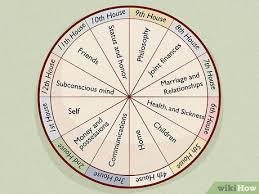
The birth chart wheel is also divided into twelve sections called houses. These houses represent different areas of your life. They are like stages on which the planetary energies, expressed through the zodiac signs, perform. Each house covers a specific domain.
For example, the first house is about your self, your appearance, and how you start things. The seventh house is about partnerships and close relationships. The tenth house is about your career and public image. The other houses cover family, finances, learning, and more.
The position of the houses is determined by your birth time and location. The point that rises on the eastern horizon at your birth is called the Ascendant or Rising Sign. This is the cusp of the first house. The houses then follow in order around the wheel.
Key Houses and Their Meanings
1st House: Self, appearance, personality, how you begin things.
2nd House: Personal finances, values, self-worth, possessions.
3rd House: Communication, siblings, short trips, local environment.
4th House: Home, family, roots, emotional security.
5th House: Romance, creativity, children, pleasures, hobbies.
6th House: Daily work, health, routines, service to others.
7th House: Partnerships, marriage, open enemies, one-on-one relationships.
8th House: Shared resources, intimacy, transformation, death, inheritances.
9th House: Higher learning, philosophy, travel, beliefs, long journeys.
10th House: Career, public image, reputation, ambition.
11th House: Friendships, hopes, wishes, social groups, future aspirations.
12th House: Subconscious, hidden matters, spirituality, self-undoing, solitude.
When I first learned about the houses, I noticed I had many planets in my 10th house of career and public life. This made sense because my job as a writer and blogger puts me in a public role. It showed me where I was meant to express a lot of my energy. It wasn’t just about having certain planets or signs; it was about where they were active in my life.
Aspects: The Conversations Between Planets
Aspects are the angular relationships between planets in your birth chart. They show how different parts of your personality or life connect and interact. Think of them as conversations or dialogues happening between the planets. These conversations can be harmonious or challenging.
Different angles create different types of aspects. Conjunctions (0 degrees) show planets working together, often merging their energies. Trines (120 degrees) are usually harmonious, bringing ease and flow. Squares (90 degrees) create tension and challenge, forcing growth. Oppositions (180 degrees) highlight a need for balance between two energies.
Learning the main aspects is very helpful. It adds a deeper layer of meaning to your chart. It’s not just about where planets are. It’s about how they talk to each other. These interactions show where you might find ease and where you might face friction.
Common Astrological Aspects
Conjunction (0°): Planets work together, merging energies. Can be very powerful.
Sextile (60°): Opportunity and easy flow between energies. Harmonious.
Square (90°): Tension, conflict, and challenge. Forces action and growth.
Trine (120°): Natural talent and harmony. Energies blend smoothly.
Opposition (180°): Awareness of opposites. Needs balance and integration.
I have a square aspect between my Mars and Saturn. Mars is about my drive and energy. Saturn is about my discipline and limits. This square means I often feel blocked or that my energy is held back. It’s a challenge. But it also pushed me to find more structured ways to use my energy. It taught me patience and planning. It wasn’t easy, but it made me more resilient.
A person I know, Sarah, has a Mercury-Neptune conjunction. Mercury is communication. Neptune is dreams and illusion. This makes her very creative and intuitive in how she speaks. But it also means she can be unclear or get lost in her thoughts. She might say things that sound beautiful but lack concrete meaning. Understanding this aspect helps her friends understand her better. It helps her focus her brilliant ideas.
Putting It All Together: Reading Your Chart
Once you have your birth chart, the real work of understanding begins. It’s like piecing together a puzzle. You look at where each planet is in a sign. Then you see which house that sign is in. Finally, you check the aspects to other planets.
For example, let’s look at a hypothetical person. Their Sun is in Aries (the sign). It’s in the 10th house (the area of life). It makes a trine aspect to their Jupiter in Sagittarius (another planet and sign). What does this mean?
The Sun in Aries means they have a strong, pioneering ego. The 10th house means this ego is focused on their career and public life. The trine to Jupiter in Sagittarius means their drive and ambition flow easily with optimism, broad thinking, and a love for learning or adventure. This person likely has a successful public career that involves teaching, travel, or philosophy. They feel naturally confident and inspired in their public role.
Contrast this with someone whose Sun is in Aries in the 10th house, but squares Saturn in Capricorn. This person’s drive might feel blocked by authority figures or their own sense of responsibility. They might have to work much harder to achieve public recognition. The challenge of the square forces them to build a strong, enduring foundation for their career.
The goal is not to find “good” or “bad” placements. Every chart is a unique blend. It’s about understanding the energies you have. It’s about learning how to work with them. This process takes time and patience. It’s a journey, not a destination.
Navigating Your Chart: What Does This Mean For You?
So, you’ve got your chart. You know the planets, signs, houses, and aspects. What now? The most important thing is to apply this to your own life. Start with the placements that seem most obvious to you.
Look at your Sun, Moon, and Rising sign. These are often called the “big three.” They give a good overview of your core personality. Your Sun sign is your ego. Your Moon sign is your feelings. Your Rising sign is how you appear to others and how you start things.
For instance, if your Sun is in Cancer, you might be naturally nurturing. If your Moon is in Leo, you might seek recognition for your emotions. If your Rising sign is Capricorn, you might seem serious and disciplined to others, even if you feel differently inside.
Don’t get discouraged if a description doesn’t feel 100% true at first. Astrology is nuanced. Your chart is a whole picture. One placement doesn’t define you. It’s the interplay of all the parts that creates the unique individual that is you.
I often tell people to check their Venus and Mars placements. Venus shows how you love and what you value. Mars shows how you act and what you desire. This can be really helpful for understanding relationship dynamics. For example, Venus in Taurus might seek stability and loyalty in love. Mars in Aries might want action and passion.
Quick Chart Checks
Big Three: Note your Sun, Moon, and Rising sign. How do they feel different or similar?
Dominant Planet/Sign/House: Do you have many planets in one sign or house? This area might be very important for you.
Challenging Aspects: Are there many squares or oppositions involving your personal planets? This shows areas where you have to work harder but can grow the most.
Easy Aspects: Are there many trines or sextiles? These show natural talents and areas of ease.
Common Misconceptions About Astrology
Like anything popular, astrology has its share of myths. One big one is that astrology is all about predicting the future. While some branches of astrology deal with timing, natal astrology (which we are discussing) is more about potentials and personality. It’s a map, not a prophecy.
Another common idea is that your Sun sign is all that matters. As we’ve seen, your birth chart is much more complex. Your Moon, Rising sign, and the positions of all the planets are equally important. For example, a Leo Sun with a shy, introverted Moon will have a very different expression of Leo energy than a Leo Sun with an outgoing Gemini Moon.
Some people think astrology is just for fun or entertainment. While it can be enjoyable, it’s also a deep system of understanding human nature. Many people find it provides profound insights into themselves and others. It offers a framework for understanding our strengths and challenges. It helps us navigate life’s complexities.
It’s also important to remember that astrology is a symbolic language. It’s not a hard science in the way physics or chemistry is. Its insights are often subtle and require personal interpretation and reflection. The planets don’t cause things to happen. They are seen as correlates to human experience and psychological patterns.
Astrology: Myth vs. Reality
Myth: Astrology predicts your exact future.
Reality: Natal astrology shows potentials, tendencies, and life themes. It’s about understanding yourself.
Myth: Your Sun sign is the only important part.
Reality: The entire birth chart—planets, signs, houses, and aspects—creates a complex, unique picture.
Myth: Astrology is a deterministic system.
Reality: Astrology offers insights and understanding, but free will and personal choices are always key.
Tips for Learning More About Your Birth Chart
The best way to learn is by doing. Get your birth chart. Spend time looking at it. Read about each planet in each sign and house. Websites like Astro-Seek, Cafe Astrology, and Astrology.com offer free charts and plenty of information.
Start small. Focus on understanding your Sun, Moon, and Rising sign first. Then move on to Mercury, Venus, and Mars. See how these placements show up in your daily life. Do you recognize the traits in yourself? Do you see them in people you know well?
Consider getting a reading from a reputable astrologer. They can help you understand your chart and how the different parts interact. This can be a valuable experience, especially when you’re first starting out. Look for someone who focuses on personal growth and empowerment.
Reading books is also helpful. Authors like Liz Greene, Stephen Arroyo, and Dane Rudhyar offer deep insights. Even beginner books can be very informative. Look for books that explain the core concepts clearly.
Don’t be afraid to explore. Astrology is a vast field. There are many different approaches and techniques. Find what resonates with you. The journey of self-discovery through astrology can be incredibly rewarding. It offers a unique lens through which to view yourself and the world.
Frequently Asked Questions About Astrology for Beginners
What is the most important part of my birth chart?
While all parts of your birth chart are important, many beginners start with the “big three”: your Sun sign, Moon sign, and Ascendant (Rising sign). These represent your core identity, emotional nature, and how you present yourself to the world, respectively.
How accurate is astrology?
Astrology is not a predictive science in the way weather forecasting is. Its accuracy lies in its ability to offer symbolic insights into personality, tendencies, and life themes. Many people find it to be a powerful tool for self-understanding and navigating life’s challenges.
Do I need to know exact birth time for astrology?
Yes, an accurate birth time is crucial for creating a precise birth chart. The houses and the Ascendant (Rising sign) are determined by the exact moment you were born. Even a difference of a few minutes can significantly alter these key placements.
What is the difference between a Sun sign and a Rising sign?
Your Sun sign represents your core ego, vitality, and conscious identity, based on your birthday. Your Rising sign (Ascendant) is the zodiac sign that was on the eastern horizon at the moment of your birth. It represents your outer personality, how you appear to others, and how you initiate things.
Can astrology explain all my problems?
Astrology can offer insights into the root causes or patterns behind your challenges, but it doesn’t solve problems on its own. It is a tool for self-awareness. Understanding your astrological chart can empower you to make conscious choices and navigate difficulties more effectively.
How can I tell if my astrological placements are “good” or “bad”?
Astrology does not have “good” or “bad” placements. Every placement represents a unique set of energies, potentials, and challenges. Difficult aspects or placements often represent areas for significant growth and mastery.
Harmonious ones show natural strengths.
Where can I get a free birth chart?
Many reputable astrology websites offer free birth chart calculators. You just need to input your birth date, exact birth time, and birth location. Popular sites include Astro-Seek, Cafe Astrology, and Astrology.com.
Conclusion: Embracing Your Cosmic Story
Learning astrology for beginners is an exciting adventure. It’s a journey into understanding yourself and the universe. Your birth chart is a unique guide. It shows your potentials and your path. Remember to be patient with yourself. This is a lifelong study. Enjoy the process of discovery!